
Slovak Republic, or shorter Slovakia is landlocked country in Central Europe. It is bordered by Czech Republic and Austria to the west, Poland to the north, Ukraine to the east and Hungary to the south. The largest city is also the capital – Bratislava, which sits along the banks of the Danube River. Slovakia is a member of the European Union, NATO, United Nations, OECD and WTO among others. The official language is Slovak, a member of the Slavic language fam.

No, not Slovenia, Slovakia!
IN PROGRESS
General info
You’re about to visit one of the most charming countries in the world. Slovak
Republic, better yet Slovakia, is located in Central Europe.
We’re gladly presenting proud neighbours:
NORTH – Poland – nice people, famous for Soplica
SOUTH – Hungary – eating too much paprika
EAST – Ukraine – cheap cigarettes
WEST – Czech Republic or Czechia – brothers from another mothers and Austria – never to be mistaken with Australia
Official language is Slovak, you may find some basic words and useful phrases in Learn Slovak <link>.
Slovakia is a member country in European Union. There has been some attempts to commit Slexit, but they were never successful.
| National name | Slovenská Republika / Slovak Republic |
| Area | 49 035 km² / 18 932 sq miles |
| Capital | Bratislava |
| Currency | Euro / € |
| Population | 5,467,253 |
| Religion | Roman Catholic, Lutheran, Reformist … |
| Time difference | GMT +1 |
Brief history
Turn into timeline:
Delving into Slovakia’s history unveils a captivating narrative filled with pivotal moments. Here’s an in-depth look:
- Ancient Roots: Slovakia’s history dates back to ancient times, with the Celts, Romans, and Slavs leaving their marks. The Slavs, in particular, played a crucial role in shaping the region’s identity.
- 7th Century: The 7th century saw the emergence of Samo’s Empire, marking a pivotal point in early Slovak political history and setting the stage for subsequent developments.
- 9th Century: The 9th century witnessed the rise of the Great Moravian Empire, contributing significantly to Slovakia’s cultural and religious identity.
- 10th Century: During the Middle Ages, Slovakia was part of the Kingdom of Hungary, leading to the construction of awe-inspiring castles like Spiš Castle and the beautiful town of Košice. The country also embraced Christianity, reflected in the stunning wooden churches of the Carpathian Mountains.
- 16th Century: Slovakia became part of the Habsburg Empire, an era marked by both prosperity and conflict. The cultural influence of the Austro-Hungarian Empire is still visible in Slovakia’s architecture and traditions.
- Post-World War II (1945): After World War II, Slovakia remained part of Czechoslovakia but under a new political landscape shaped by the war’s aftermath.
- First Slovak Republic (1939-1945): During this period, Slovakia existed as a separate entity within Czechoslovakia, characterized by its status as a client state of Nazi Germany, representing a challenging phase in Slovakia’s history (ugly times).
- Communist Era (1945-1989): Following the war, Slovakia returned to Czechoslovakia and experienced decades under communist rule as a Soviet satellite, marked by political and social transformations.
- Velvet Revolution (1989): The year 1989 marked a turning point with the Velvet Revolution, signaling the end of communist rule and paving the way for democratic reforms and increased autonomy.
- Independence (1993-present): In 1993, Slovakia peacefully gained independence from Czechoslovakia, becoming the Slovak Republic, a sovereign nation that continues to evolve and thrive.
Must visit sights
Slovakia boasts an array of must-visit places and attractions, each with its unique charm and history. Here are five you can’t miss:
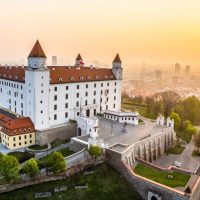
- Bratislava Castle: Perched atop a hill overlooking the capital, Bratislava Castle is an iconic symbol of the city. Its history dates back over a millennium, and today it houses fascinating exhibitions on Slovakia’s past.
- Spiš Castle: Located in eastern Slovakia, it was built in the 12th century and has been a UNESCO World Heritage Site since 1993. The castle’s ruins cover an area of over 41,000 square meters and include a Romanesque chapel, a Gothic palace, and various defensive structures. The site offers a glimpse into medieval life and boasts breathtaking views of the surrounding countryside.
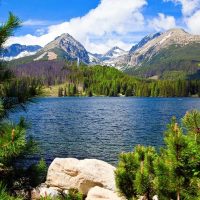
- High Tatras: Nature enthusiasts will be enthralled by the High Tatras. This stunning mountain range offers breathtaking alpine scenery, with numerous hiking trails, alpine lakes, and picturesque valleys.
- Banská Štiavnica: This historical town is a treasure trove of mining history and baroque architecture. Its rich history is evident in the well-preserved medieval architecture, including the Old Castle, New Castle, and the Holy Trinity Square. Best for exploring the city, roam the charming streets, and soak in the town’s unique atmosphere.
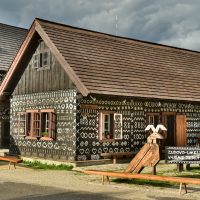
- Čičmany: Known for its folk architecture, Čičmany is a village frozen in time. The distinctive white houses adorned with traditional painted patterns offer a glimpse into Slovakia’s rural heritage.
- Slovak Paradise National Park: Heaven for adventurers, offering a unique landscape of gorges, canyons, and waterfalls. The park is renowned for its extensive network of hiking trails that feature ladders, chains, and bridges to navigate the rugged terrain. One of the most popular trails leads through the Suchá Belá gorge, known for its stunning waterfalls and rock formations.


suchá belá
Weather
Spring
March to June
Days are often sunny with temperature around 14 °C (57 F). There might be some April rain, which is considered refreshing.
Summer
June to September
Its the hottest weather throughout the year. Average temperature is around 30 °C (86 F). Perfect for tailgating, long walks in city, beer outside, etc.
Autumn
September to December
The most colorful season of all. Similar to Spring, but a little bit colder. Average temperature is about 14 °C (57 F).
Winter
December to March
Will become your favourite if you have never seen snow. Temperature may lower to negative values, in some parts of Slovakia may be even -15 °C.
Little bit of politics
Slovakia is parliamentary democracy.
There are three supreme bodies of state power in Slovak Republic:
President: Head of state
Currently Peter Pellegrini.
The National Council of Slovak Republic
The highest legislative body
150 members of winning parties in elections
The Government
Head of government has the biggest executive power.
Currently Robert Fico.
Food
Slovaks are big eaters and great drinkers.
National alcohol is either borovička or slivovica. It is very hard for us to agree on this one. Borovička is a pine tree vodka and slivovica is made from plums. Traditionally, when Slovaks welcome visitors from abroad, they serve slivovica and bread with salt. If you are not comfortable with such a strong alcohol, Slovakia is popular for its white wine and beer.
Slovak cuisine is a hearty blend of rustic dishes reflecting the country’s agricultural heritage and Central European influences. The national dish, Bryndzové Halušky, features potato dumplings with tangy sheep cheese and fried bacon. Kapustnica, a festive sauerkraut soup with smoked meat, mushrooms, and spices, offers a tangy and warming taste.
For dessert we have Lokše, or potato pancakes, which can be savory, paired with duck or goose, or sweet, filled with poppy seeds or jam and Žemľovka, which is a beloved dessert, a sweet bread pudding layered with apples, milk, eggs, and sugar, often enhanced with raisins and cinnamon.
Slovak cuisine provides a comforting and flavorful culinary experience, showcasing the rich traditions of this beautiful country.
Culture
Slovakia is proud of its rich folklore and folk traditions. Each region, city, and municipality has a unique character and folklore – costumes, music, songs,
architecture, customs, traditions, dances and dialects. Folklore festivals organised all around Slovakia serve to present the folk customs of individual regions.
Traditional clothing is called “KROJ” and it may vary depending on region.
Learn Slovak
| Good morning! | Dobré ráno! | help | pomoc |
| Good afternoon! | Dobrý deň! | police | polícia |
| Good evening! | Dobrý večer! | taxi | taxík |
| Good night! | Dobrú noc! | doctor | doktor |
| Nice to meet you. | Rád ťa poznávam. | pharmacy | lekáreň |
| How are you? | Ako sa máš? | numbers | čísla |
| What is your name? | Ako sa voláš? | one | jeden |
| My name is | Volám sa | two | dva |
| How much does it cost? | Koľko to stojí? | three | tri |
| greeting | pozdrav | four | štyri |
| Hello! | Ahoj! | five | päť |
| Good bye! | Dovidenia! | six | šesť |
| yes | áno | seven | sedem |
| no | nie | eight | osem |
| please | prosím | nine | deväť |
| thank you | ďakujem | ten | desať |
| sorry | prepáč | chocolate | čokoláda |
| good | dobre | rice | ryža |
| meal | jedlo | potatoes | zemiaky |
| bread | chlieb | tomatoes | paradajky |
| ham | šunka | pasta | cestoviny |
| butter | maslo | sugar | cukor |
| egg | vajce | salt | soľ |
| chicken | kurča | milk | mlieko |
| fish | ryba | coffee | káva |
| vine | víno | tee | čaj |
| cheers | jebnime si | beer | pivo |
Fun facts - IN PROGRESS
Fun Facts: Discover Slovakia’s Unique Charms
Slovakia’s uniqueness extends to its quirks and hidden gems. Here are more fun facts:
- Slovakia is not Slovenia
Slovakia vs. Slovenia is such a big problem that employers from both countries are forced to meet once a month to exchange misplaced letters from one country to another. 23% of all packages are being misplaced between Slovakia and Slovenia. - Cave Wonders: Slovakia boasts over 6,000 caves, including the astounding Domica Cave, featuring underground rivers and magnificent stalactite formations.
- Spa Culture: The country’s natural hot springs and spa towns, like Piešťany and Rajecké Teplice, offer a rejuvenating escape.
- Borovička Tradition: Borovička, a traditional Slovak spirit made from juniper berries, is a beloved drink at gatherings and celebrations.
- Vlkolínec: This picturesque village is a UNESCO World Heritage site, preserving the traditional architecture of the region.
- Slovak Film Achievements: Slovakia has a thriving film industry, with notable works such as „The Shop on Main Street“ winning an Academy Award.